
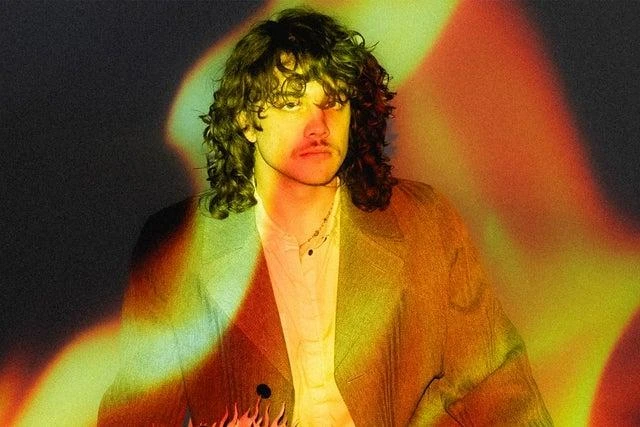
Quick Bio
| Detail | Information |
|---|---|
| Full Name | Roe Kapara |
| Real Name | Austin Sellinger* |
| Date of Birth | April 19 — year inconsistently reported |
| Current Age | Not Publicly Disclosed; secondary sources conflict between 28 and 29 |
| Birthplace | St. Louis, Missouri, United States |
| Nationality | American |
| Ethnicity | Not Publicly Disclosed |
| Profession | Singer-songwriter, musician, producer |
| Genre | Alternative, indie rock, indie pop, punk, pop-rock |
| Record Label | Epitaph Records |
| Estimated Net Worth | Not Publicly Disclosed |
| Height | Not Publicly Disclosed |
| Weight | Not Publicly Disclosed |
| Hair Color | Not Publicly Disclosed |
| Eye Color | Not Publicly Disclosed |
| Relationship Status | Not Publicly Disclosed |
*His official website identifies Roe Kapara as Austin Sellinger, although most established music coverage uses his stage name.
Who Is Roe Kapara?
Roe Kapara is the kind of musician who can make a song about anxiety, capitalism, death or a messy relationship feel strangely fun.
That contrast is a big part of his appeal.
Kapara’s music combines indie rock, alternative pop, punk energy, psychedelic touches and a healthy dose of dark comedy. His lyrics can be bleak, but the music often has enough melody, groove and personality to make you want to sing along anyway. That balance has helped him build a substantial audience without losing the slightly odd, homemade quality that defined his earliest releases.
The Los Angeles-based artist is particularly notable for turning very personal experiences into songs that feel bigger than their original stories. His catalog moves from the workplace frustration of “Employment Cost” to the toxic relationship at the center of “Better Off,” the existential themes of I Hope Hell Isn’t Real, the social commentary of Big Cigars and Satin Shorts, and the more romantic “My Love” in 2026.
His latest release, “Crying On Vacation,” arrived on June 10, 2026, giving fans another glimpse of his willingness to push his sound in a different direction. The track leans toward surf rock and has a brighter, more developed arrangement than some of his earlier, rougher material.
As of September 2026, Kapara is also continuing to build his profile through new music and live performances. His official music ecosystem lists releases on Epitaph Records and directs fans toward his latest music and community channels.
Early Life and Background
Roe Kapara was born in St. Louis, Missouri, although publicly available sources disagree about his birth year. Apple Music lists April 19, 1997, while Famous Birthdays gives April 19, 1998. Another biography also lists 1998. Because there is no sufficiently authoritative primary source confirming the year, it would be misleading to present either year as established fact.
What is much clearer is the geographic path that shaped his early adulthood. Kapara eventually relocated from Nashville to Los Angeles shortly before the COVID-19 pandemic. That timing turned out to have a major effect on his career.
When he arrived in Los Angeles, he was already performing live and opening shows, including some unusual gigs where he found himself playing for audiences at comedy events. Then the pandemic shut down live entertainment.
Instead of disappearing, Kapara moved much of his creative life online.
In an interview with Highwire Daze, he explained that the pandemic made him realize just how little online presence he had. He spent huge amounts of time online, connected with his producer Sensu through Discord, and began experimenting with ways to promote his music digitally. At first, he admits, he had very little idea what he was doing.
That trial-and-error period became one of the most important chapters in his career.
Kapara has also spoken about the importance of movies to his creative imagination. He has said that he likes thinking about what movie a song might play over while writing it. The approach helped give his music a cinematic quality, particularly on songs influenced by the dark and surreal atmosphere of 1990s filmmaking. He specifically connected “Everyone’s Dying (Grandma’s Drunk Again)” with the work of Tim Burton and films such as Coraline, Edward Scissorhands and The Nightmare Before Christmas.
That combination of music, film and absurd humor became central to the Roe Kapara identity.
Career Journey and Breakthrough
Kapara’s breakthrough did not arrive through a conventional major-label route. His early catalog was largely built around self-released music and an increasingly active internet audience.
One of the most important early songs was “Employment Cost,” released in 2021. The track took frustration with work and corporate life and turned it into a sharp alternative song that connected with listeners well beyond Kapara’s immediate audience.
The song eventually became a major streaming success. Later coverage has credited it with more than 12 million streams and more than 112 million TikTok views, helping turn Kapara from an emerging DIY artist into a genuine streaming-era breakout.
The internet was not merely a marketing tool for him. It became part of the way he built his career.
Kapara’s TikTok following grew rapidly, passing hundreds of thousands of followers as his songs circulated through the platform. By early 2023, Music Connection reported more than 260,000 TikTok followers and 4.6 million likes.
Signing With Epitaph Records
The next major step came in 2023, when Kapara signed with Epitaph Records.
The connection was particularly meaningful because Kapara already knew the label’s reputation from listening to its artists while growing up. His friend and fellow artist Dolo Tonight had also signed with Epitaph, helping create a personal connection between Kapara and the label.
His first Epitaph release was “Better Off.”
And this is where the frequently confused “Better Days” search term needs correcting: there is substantial documentation for “Better Off,” but I found no reliable evidence that Kapara released a song called “Better Days.”
“Better Off” came from a painful but recognizable place. Kapara described a long-distance relationship during his college years as deeply codependent. Looking back, he felt that the experience had ultimately taught him something about himself and why he was better off moving on.
Musically, the song was anything but a traditional breakup ballad. Staccato guitar parts, jazzy rhythms, synths and bright production gave the track a sunny surface while the lyrics dealt with jealousy, insecurity and a dysfunctional relationship.
I Hope Hell Isn’t Real
Kapara followed his Epitaph signing with the EP I Hope Hell Isn’t Real in April 2023.
The project helped establish the larger fictional and cinematic world behind his songwriting. Rather than simply stringing unrelated singles together, Kapara imagined a character living in an apathetic, deteriorating world who eventually dies and returns to life with a renewed understanding of meaning. Epitaph described the project as a surreal storyline inspired in part by 1990s movies.
Songs such as “Preacher,” “Everyone’s Dying (Grandma’s Drunk Again)” and “This Time Last Week” demonstrated the range of his writing. Religious upbringing, death, regret, boredom and modern alienation appear repeatedly, but Kapara rarely presents them with a completely straight face.
That is what makes his songs recognizable. He can take something genuinely depressing and give it an unexpectedly catchy chorus.
Big Cigars and Satin Shorts
In 2024, Kapara released his second Epitaph project, Big Cigars and Satin Shorts.
The EP pushed harder into alternative and indie rock while retaining the humor and self-deprecation of his earlier work. Tracks included “Dumb,” “Cigars and Satin Shorts,” “Hate Myself,” “Glorious Day” and “The Dead Come Talking.”
The subject matter also expanded beyond personal relationships.
Kapara began writing more directly about wealth disparity, corporate greed, consumerism and the feeling that modern adulthood is failing to deliver the future people were promised. Epitaph describes the project as combining punk energy with indie-rock songwriting and social commentary.
Interestingly, Kapara has said that he did not originally set out to write anti-establishment songs. His explanation was much simpler: modern life itself was making him feel that way.
Roe Kapara’s Indie Rock Roots and Sound
Calling Kapara simply an indie-rock artist does not quite cover it.
His music pulls from indie rock, alternative rock, pop-punk, dream pop, psychedelic music and pop. Epitaph has highlighted influences and sonic similarities involving acts such as Cage the Elephant and Weezer, while other coverage has noted echoes of early-2000s alternative rock.
There is also an important distinction between his songwriting process and his finished recordings.
Kapara has explained that he usually starts songs on acoustic guitar. The guitar gives him an immediate, uncomplicated way to write and concentrate on the emotion behind the song. Once the basic song exists, he takes it into the studio or bedroom studio and allows the arrangement to become whatever it needs to be.
That approach helps explain why his recordings can sound much bigger than the original songwriting setup.
The acoustic guitar provides the skeleton. Studio production supplies the personality.
His recordings have included electric guitars, synths, drums, layered vocals and other textures, with recent songs showing an increasing willingness to experiment. “My Love,” released in February 2026, features guitar from Ryan Spraker, drums from David Brophy and backing vocals from the Eagle Rock Men’s Choir. Kapara is credited as producer, while Patrick DiCenso handled mixing.
There is no reliable public inventory of his personal studio gear—specific microphones, guitars, pedals, interfaces, amplifiers or DAWs—so claims about an exact Roe Kapara gear setup should be treated cautiously.
“My Love” and the 2026 Chapter
Kapara entered 2026 with “My Love,” released February 19 through Epitaph.
The song showed another side of his writing. Rather than focusing primarily on social anxiety or existential dread, it is a lovestruck, melodic track with choir-backed vocals and a deliberately romantic feel.
Then came “Crying On Vacation” on June 10.
The track is particularly interesting because it suggests that Kapara is not interested in simply repeating the formula that got him noticed. idobi described it as a surf-rock-leaning song with a more developed arrangement and a groovy quality that reaches toward a 1970s/1980s feel. Kapara himself connected the sound to the indie rock he loved when he was younger, mixed with an unexpected ABBA influence.
That willingness to shift styles without abandoning his lyrical personality has become an important part of his career.
Body Stats and Physical Appearance
There are no sufficiently reliable public sources confirming Roe Kapara’s exact height or weight, so those figures should not be published as fact.
Likewise, a verified measurement for his height and weight is not listed by his record label or major music platforms. His public image is instead closely tied to his visual presentation: quirky styling, expressive performance, unconventional humor and music videos that extend the fictional worlds of his songs.
His videos are especially important to his identity as an artist. Kapara has described starting video concepts by imagining something deliberately silly and then figuring out how to make the idea feel serious.
Scandals, Controversies & Media Headlines
Clean Public Record
There is no major, well-documented scandal or criminal controversy associated with Roe Kapara in the reputable sources reviewed for this biography.
His lyrics can be provocative, sexual, bleak or deliberately strange, but that is part of his artistic persona rather than evidence of a personal controversy.
Media coverage has instead focused on his music, online rise, unconventional visual style, social commentary and transition from DIY releases to Epitaph Records.
His songs sometimes address subjects that could easily become contentious—religion, capitalism, corporate exploitation, death and relationships—but Kapara generally approaches them through satire and personal storytelling.
If you enjoy discovering new names in entertainment and pop culture, check out our Kalie Cassidy biography, along with profiles of pole-vaulter Molly Caudery, streamer Sodapoppin, author Devney Perry, and voice actor Emi Lo for more career stories, personal details, and recent highlights
Personal Life, Hobbies and Relationships
Kapara keeps much of his private life away from the public record.
One past relationship is well documented because he discussed it while explaining “Better Off.” He described it as a long-distance relationship that began around his school years and continued into college, eventually becoming codependent. The experience later became songwriting material.
That does not mean his current relationship status is known. There is no reliable public confirmation of a current partner, marriage or engagement, so his present relationship status is best listed as not publicly disclosed.
Movies appear to be one of his clearest creative interests. Kapara has repeatedly discussed the influence of 1990s cinema on his songwriting, particularly the way a movie can provide a visual mood or narrative framework for a song.
Music itself is obviously another major part of his life outside recording. He has spoken about wanting to eventually undertake a world tour, while his growing live career has taken him across the United States and into the UK and Europe.
His relationship with fans is also unusually direct for an artist at his level. His official Linktree promotes a Discord community alongside his social accounts, music and merchandise, showing how important direct fan interaction remains to his career.
Official Social Media Handles
For the safest navigation, fans should use the accounts linked from Kapara’s official Linktree rather than relying on unofficial fan pages. His primary handle is @roekapara across several platforms.
Instagram: @roekapara on Instagram
TikTok: @roekapara on TikTok
X/Twitter: @roe_kapara on X
YouTube: Roe Kapara on YouTube
Official website: Roe Kapara’s official website
Official Linktree: Roe Kapara’s official Linktree
Roe Kapara’s Discography at a Glance
His catalog has grown considerably from the DIY period that first introduced him to online listeners.
Some key releases include “Employment Cost” (2021), “Daisies” (2021), “Everyone’s Dying (Grandma’s Drunk Again)” (2022), “Everything’s Fine (Nuke Song)” (2022), “Better Off” (2023), I Hope Hell Isn’t Real (2023), “Fajita!” (2023), “The Dead Come Talking” (2023), “Glorious Day” (2024), Big Cigars and Satin Shorts (2024), “Feel Sexy” (2025), “Good Times” (2025), “My Love” (2026), and “Crying On Vacation” (2026).
For anyone discovering him for the first time, “Employment Cost” is the obvious starting point for understanding his breakout, while “Better Off” captures his early Epitaph era. I Hope Hell Isn’t Real provides the best introduction to his cinematic storytelling, and Big Cigars and Satin Shorts shows how his indie-rock sound and social commentary developed.
Why Roe Kapara Is Worth Watching
Roe Kapara’s story is interesting because it does not follow the usual overnight-success script.
He moved from St. Louis to Nashville, then to Los Angeles shortly before a global pandemic shut down live music. Instead of waiting for the traditional music industry to reopen, he learned how to use the internet, worked closely with collaborators remotely, released songs independently and built an audience directly.
That audience eventually became large enough to attract Epitaph Records.
Since then, he has continued to expand rather than settle on one formula. His songwriting remains rooted in emotional honesty, but the subject matter can jump from a toxic romance to corporate burnout, mortality, religion, body insecurity or romantic obsession. The production can move from bedroom-style acoustic beginnings to punchy indie rock, pop-punk, psychedelic textures and, more recently, surf-rock influences.
Perhaps the most distinctive thing about Roe Kapara is that he does not seem particularly interested in choosing between being funny and being serious.
He wants both.
A song can make you laugh at an absurd lyric and then leave you thinking about loneliness, work, mortality or the strange experience of growing up in modern America. That mixture of vulnerability, sarcasm and catchy alternative songwriting is what has given Kapara a recognizable identity—and it is also why his newer releases are worth following.
As of 2026, he is no longer simply the DIY musician who went viral with “Employment Cost.” He is an established Epitaph artist with multiple EPs, a growing catalog, a sizeable streaming audience and a sound that is still changing.
And if “My Love” and “Crying On Vacation” are any indication, the next chapter may sound quite different from the one that came before it.
Visit our Music & Artists Page for more.